What happened
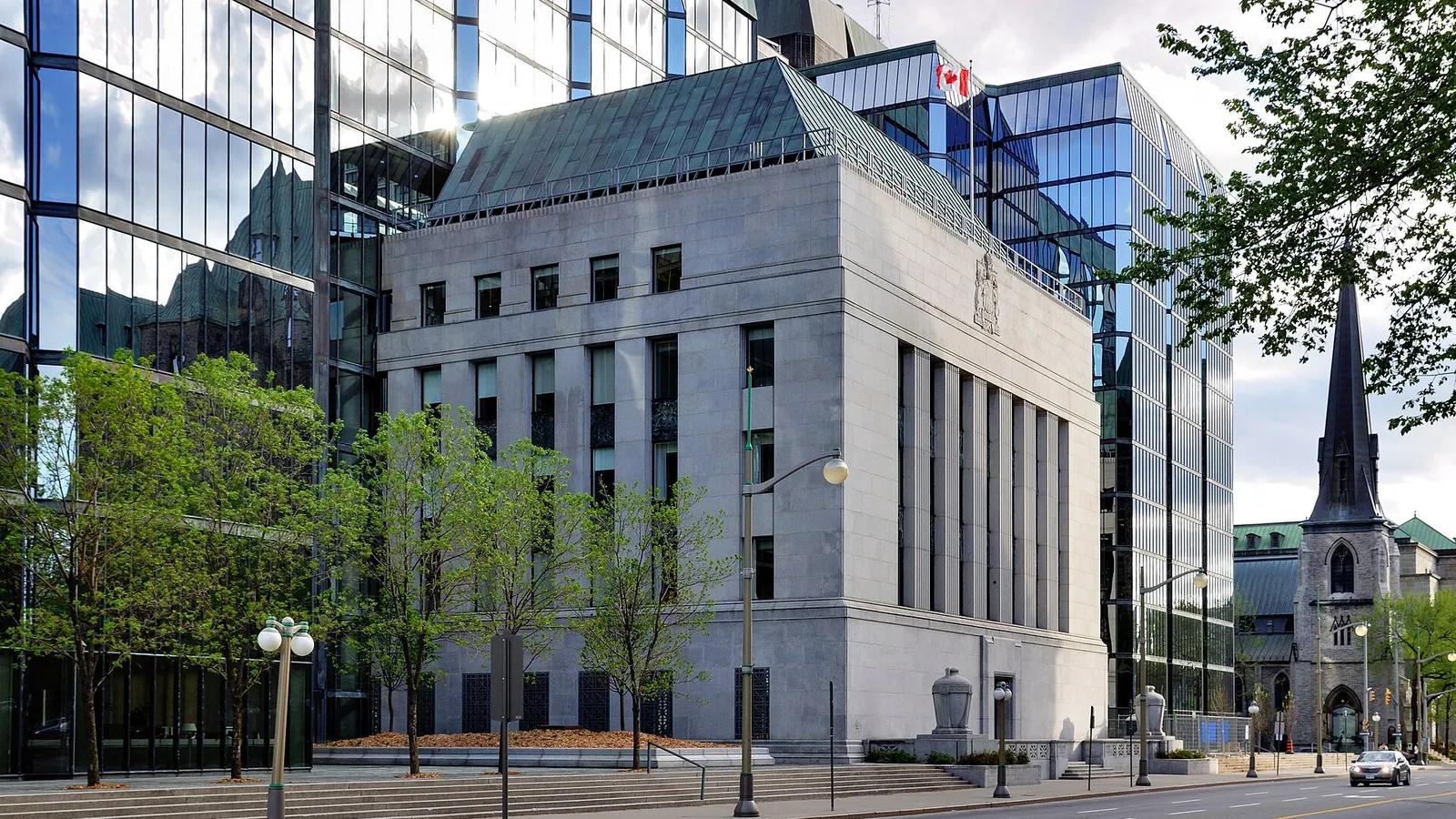
On November 3, 2026, Bank of Canada Governor Tiff Macklem appeared before the House of Commons Standing Committee on Finance in Ottawa, with Senior Deputy Governor Carolyn Rogers. Below is what his opening statement said. All of it is the Bank’s own explanation and outlook.
- Last week (October 28) the Bank raised its policy rate by 25 basis points (0.25 percentage points) to 2.5%. It was the first increase since July 2023.
- He named two changes since the July report. First, the inflation outlook got worse: with the war in the Middle East going on, world oil prices have risen and are expected to stay high for longer. Second, Canada’s growth outlook improved a little.
- GDP grew 3.3% in the second quarter, and recent indicators point to growth of about 2% in the third quarter.
- The unemployment rate has been about 6.5% for several months.
- CPI inflation has been about 3% since April and is expected to rise to about 3.5% by year-end.
- Inflation is expected to stay at or above 3% through much of 2027, then get back close to the 2% target by the middle of 2028.
- The Bank projects growth of 1% in 2026, and about 2% in each of 2027 and 2028.
- 2.5%Policy rate (October 28 decision)
- about 3.5%Inflation expected by year-end (the Bank)
- 3.3%GDP growth, second quarter
- about 6.5%Unemployment rate (for several months)
In a chart: the last hike, a year ago, and now
The Governor said this was the "first interest rate increase since July 2023." So the chart sets the rate back then, the same October decision a year ago, and this decision side by side.
| Period | Value (%) |
|---|---|
| Jul 12, 2023 | 5% |
| Oct 29, 2025 | 2.25% |
| Oct 28, 2026 | 2.5% |
Why these years: July 2023 was the last hike before this one (5%), October 2025 is the same month a year ago, and October 2026 is the decision the Governor explained.
Each number was checked in the Bank’s press release of that date (2023-07-12: 5%, 2025-10-29: 2.25%, 2026-10-28: 2.5%).
Source: Bank of Canada press releases (2023-07-12, 2025-10-29, 2026-10-28) (checked Nov 4, 2026). Bars start at zero.
The terms in plain words
- House of Commons Standing Committee on Finance: a group of federal MPs that looks at the country’s money and the economy. The Governor of the Bank of Canada comes to committees like this to explain decisions and answer MPs’ questions.
- Policy rate: the one-day lending rate target set by the central bank. Bank prime rates follow it, and variable-rate mortgages are priced off prime.
- Basis point: 0.01 of a percentage point. 25 basis points is 0.25 percentage points.
- CPI inflation: how much the consumer price index (CPI, a measure of the prices of goods and services people usually buy) has risen from a year ago, in percent. The Bank’s target is 2%.
- Monetary Policy Report: the Bank’s outlook report for inflation and growth, published four times a year. The "July report" in the statement is last July’s.
- Pass-through: when businesses add their higher costs (fuel, shipping and so on) to their prices, passing them on to customers.
- Excess supply: when the economy could produce more than people are actually buying. Prices usually rise more slowly then.
What the Governor explained
The Governor said high oil prices hit Canadians directly at the gas pump and raise costs for many businesses. So far, businesses have mostly absorbed their higher costs, but past experience and Bank surveys suggest they will pass more of them on over the next year. That could keep inflation high for longer.
On growth, he said the economy picked up in the middle of the year: consumer spending was solid, and exports and business investment bounced back. The Bank expects new U.S. tariffs to slow growth in the fourth quarter, and growth to pick up again in 2027. He added that many indicators still point to "some excess supply" in the economy.
Because inflation is expected to stay high for longer and the economy is holding up, the Bank’s Governing Council judged there was less room to keep rates low ("monetary accommodation"). It will now take decisions "one meeting at a time."
He said the situation in the Middle East and Canada-U.S. trade are still changing, and it is uncertain what impact new U.S. tariffs will have and how much energy costs will spread into consumer prices more broadly.
There could be a need to raise the policy rate further, but given the uncertainties, we will proceed carefully.Governor Tiff Macklem, opening statement to the House of Commons Standing Committee on Finance, November 3, 2026What it means for GTA buyers, sellers and renters (explanation)
This explains how the Governor’s remarks connect to housing. It is not advice. Check actual rates and terms with your lender, and your own situation with a professional.
- If you have a variable-rate mortgage: the policy rate already went up to 2.5% on October 28. This statement was not a new decision; it explained that one. The Bank said it may raise the rate further, but any actual change comes only at a future decision.
- If you have a fixed-rate mortgage or a renewal coming up: fixed rates follow bond yields and other factors, not just the policy rate. If your renewal is close, talking to your lender early is the usual step.
- If you are buying: when rates move, the mortgage stress test (a check that you could still pay at a higher rate than your actual one) can change how much you can borrow. Check how long your pre-approval holds its rate.
- If you are selling: the Bank expects inflation to stay at or above 3% through much of 2027. Buyers’ borrowing costs can affect demand, but this article does not predict how the market will move.
- If you rent: even if fuel and living costs rise, most existing tenants in Ontario can only get rent increases within the yearly guideline. For exempt buildings, see "rent control exemption" in the glossary.
What to watch next
The Bank announces its policy rate on eight fixed dates a year. For the next announcement date, check the official schedule on the Bank of Canada website. Inflation numbers come from Statistics Canada’s monthly consumer price index. This article does not predict the next decision or where inflation will go.
Sources (open the originals)
- Original: Bank of Canada, opening statement before the House of Commons Standing Committee on Finance (2026-11-03) — checked Nov 4, 2026
- Bank of Canada, press release of October 28, 2026 — checked Nov 4, 2026
- Bank of Canada, Policy interest rate (with the 2026 and 2027 announcement schedule) — checked Nov 4, 2026
- Bank of Canada, press release of October 29, 2025 — checked Nov 4, 2026
- Bank of Canada, press release of July 12, 2023 — checked Nov 4, 2026
- Bank of Canada, Monetary Policy Report — checked Nov 4, 2026
- Bank of Canada, Inflation — checked Nov 4, 2026