Commercial valuation
How to value: Restaurant
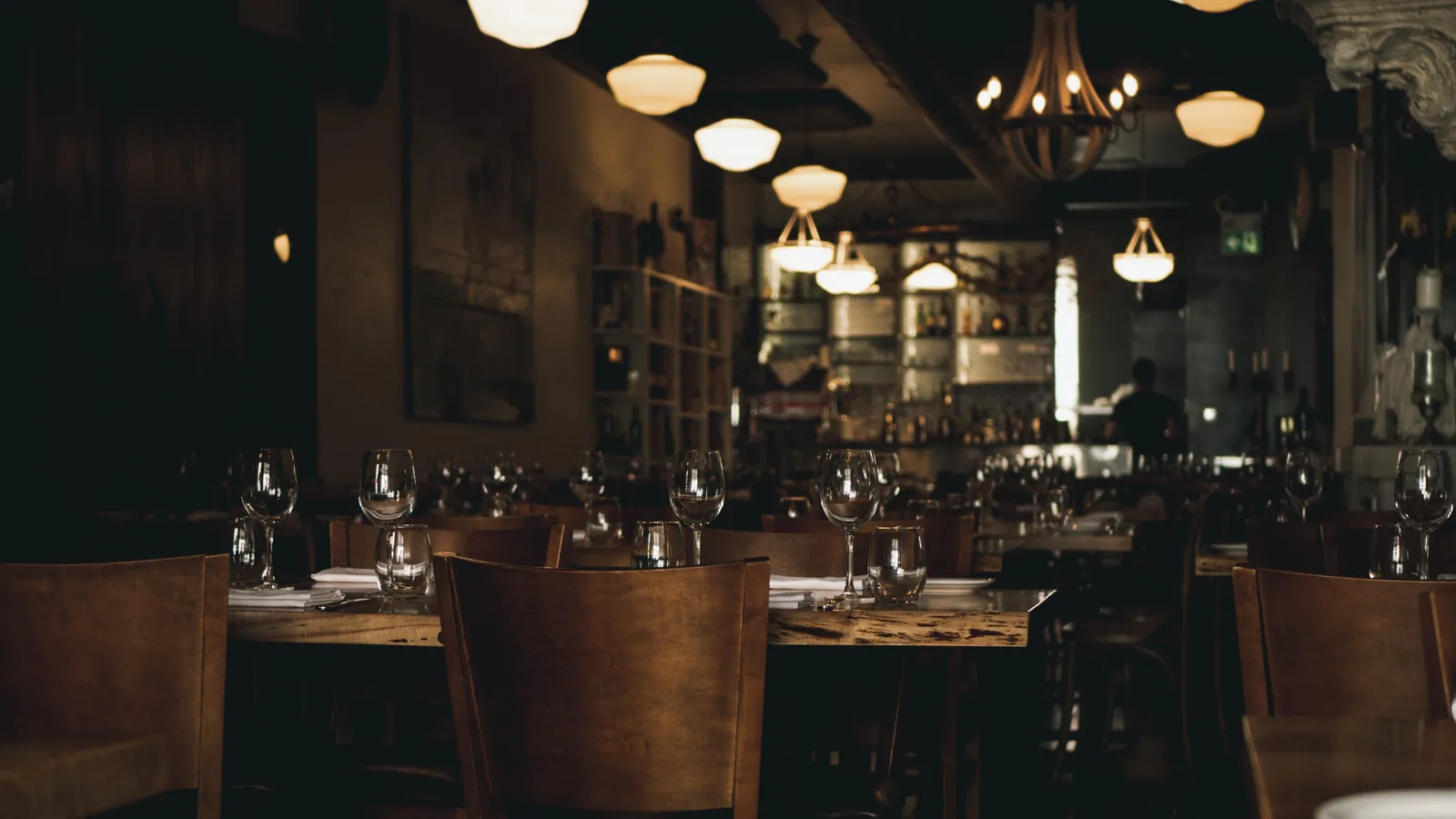
Most restaurants are bought and sold as a business operating in a rented space. So the value comes from the business’s profit and the lease terms, not the building. With the same profit, a short remaining lease can lower the value a lot.
Main method
Check first
Time left on the lease and its transfer
Watch out for
Liquor licence transfer and personal guarantees
Timing and the market The value of this type changes with the time and the market mood. Every number below is a made-up example, not a real market number.
How this type is valued
The most common method multiplies seller’s discretionary earnings (SDE: the owner’s pay and personal costs added back to the profit) by a multiple. A larger restaurant run by hired staff rather than the owner is sometimes valued as a multiple of EBITDA (earnings before interest, taxes and depreciation).
The multiple is not a fixed number. It changes with the time left on the lease, the sales trend, whether the restaurant runs without the owner, the condition of the equipment, the location and the market mood.
The business value includes goodwill (value you cannot see, such as regulars, location and name). It is similar to “key money” (권리금) in Korea, but in Canada it is settled inside the purchase price.
Make it clear in the contract whether equipment, interior fit-out and inventory are included in the business value or counted separately.
If you buy a building that contains a restaurant, value the building (income or direct comparison) and the business separately.
What drives the value
- The time left on the lease and renewal options: if the lease ends the business may not be able to continue, so this affects value the most.
- Rent as a share of sales: if rent is too high compared with sales, little profit is left.
- The sales trend over the last few years: up or down.
- Whether the restaurant runs without the owner, and whether the chef and staff will stay.
- Whether there is a liquor licence and whether the new owner can take it over.
- The condition and ownership of equipment: owned or leased.
- Location, signage, parking, whether a patio is possible, and nearby competition.
Documents and numbers to check
- Tax returns, profit and loss statements, HST returns, bank deposits and card terminal settlements for the last 3 years.
- Monthly sales and major costs (food, labour, rent).
- The lease: time left, renewal options, the landlord’s consent to transfer it, and any personal guarantee.
- The liquor licence and operating permits, and health inspection records.
- The equipment list, equipment leases, and whether anything is pledged as security for a loan.
- A list of staff, pay and terms.
- How the deal is structured: buying the assets or buying the whole company (tax and liability differ, so check with a lawyer and an accountant).
What to watch out for
- A short lease where the landlord will not extend it or consent to transferring it.
- Sales and profit on the books that differ from reality: cash sales or the owner’s personal costs may be mixed in.
- An owner who is the whole kitchen and the whole customer relationship, so sales may fall a lot if the owner leaves.
- A liquor licence the new owner cannot use right away, which can delay opening.
- Worn equipment or fit-out that will soon need a big replacement.
- A lease with a personal guarantee, which can put your own assets at risk if the business fails.
A made-up example: the same restaurant with different time left on the lease
These numbers are made up to show the arithmetic. They are not real multiples or prices from any deal. The example is a restaurant with seller’s discretionary earnings (SDE) of $120,000 a year, where the multiple is assumed to depend on the time left on the lease. Equipment and inventory are assumed to be counted separately and are not included.
| Time left on lease (made up) | Multiple (made up) | SDE | Business value (rough) |
|---|---|---|---|
| 1 year | 1.0x | $120,000 | $120,000 |
| 5 years | 2.0x | $120,000 | $240,000 |
| 10 years | 2.5x | $120,000 | $300,000 |
What changes with timing and the market
- When dining demand, food prices and wages are changing, the same sales can leave different profit, so check that the last few months’ profit is normal.
- When loan rates rise, buyers of businesses carry a heavier load and the multiple may fall. (A general principle, not a rule.)
- When many restaurants close, a lot of used equipment and space comes up and the buyer may have more room to negotiate.
- If sales rise and fall with the season or local events, look at the whole year.
- Do not treat the price of a similar restaurant sold a few months ago as today’s price.
Official sources
What the official sources say 4
You can't sell or serve alcohol without a valid liquor licence. … You can transfer your licence to someone else provided that the regulatory requirements are met, subject to the approval of the AGCO.In plain wordsYou cannot sell or serve alcohol without a valid liquor licence. A licence can be transferred to someone else if the rules are met, but it needs AGCO’s approval. Buying a restaurant does not automatically bring the licence along. The new owner must apply for the transfer.
Source: agco.ca/en/alcohol/manage-your-liquor-sales-licence · checked Nov 2, 2026
A transfer of the licence is required if there is a prescribed change of ownership of a business carried on under a licence or if the licensee changes, or if a different person wishes to acquire the licence.In plain wordsA transfer is needed when the ownership of a licensed business changes in the way the rules describe, or when the licence holder changes. The same guide also says a liquor sales licence is issued for operation at a specific location. Check the steps and documents in AGCO’s guide.
Source: agco.ca/en/alcohol/responsibilities-and-resources/guides/section-7-transferring-liquor-sales-licence · checked Nov 2, 2026
This Act does not apply to tenancies and tenancy agreements to which the Residential Tenancies Act, 2006 applies.In plain wordsThe Commercial Tenancies Act (CTA) does not apply to tenancies that the Residential Tenancies Act (RTA) applies to. The RTA covers rental units where people live, so leases of commercial space such as shops, offices and warehouses are usually looked at under the commercial law rather than the RTA. Check mixed buildings with shops below and homes above separately.
Source: ontario.ca/laws/statute/90l07 · checked Nov 2, 2026
A particular supply by way of sale of a residential complex or an interest in a residential complex made by a particular person who is not a builder of the complex or, if the complex is a multiple unit residential complex, an addition to the complex, unlessIn plain wordsThe exempt list includes the sale of a residential complex by someone who is not its builder. A sale of a commercial or industrial building or land does not fall under this item, so HST often applies. It depends on whether the seller is an HST registrant and how the buyer reports it, so check with an accountant.
Source: laws-lois.justice.gc.ca/eng/acts/E-15/page-120.html · checked Oct 30, 2026
FAQ
Is there a separate payment like “key money”?
There is no set system like Korea’s. Goodwill is included in the price of the business, and the contract shows how the price is split between the business, equipment and inventory. Tax treatment can differ, so check with an accountant.
Does the liquor licence come with the business automatically?
Not necessarily. How the new owner takes over a licence depends on AGCO (Alcohol and Gaming Commission of Ontario) guidance. See the source box below on this page.
How do I split the building value and the business value?
Value the building by the income approach or direct comparison and the business by a profit multiple, separately. If the restaurant paid rent before, that rent disappears once you own the building, so the business profit changes. Ask an accountant to recalculate.
Other types
Retail (storefront and plaza)
Street storefronts, strip plazas and ground-floor shops. The quality of tenants and leases sets the value.
See details →
Auto shop (repair and body shop)
Repair shops, body shops and tire shops. Value the building and the business separately, and check the environment.
See details →
Convenience store and gas station
Convenience stores and gas stations with a store. Look at store profit, fuel sales and the tank and environmental issues separately.
See details →
Shall we look at the building you are considering?
Tell me about the property or business you are looking at and I will explain how it is valued and what to check first. A formal appraisal is done by a qualified appraiser.
This page was made from official sources checked on Nov 2, 2026. It is not legal, tax or financial advice.
Main sources for this page
- AGCO, Manage your liquor sales licence · Nov 2, 2026
- AGCO, Guide: Transferring a liquor sales licence · Nov 2, 2026
- Commercial Tenancies Act (Ontario) · Nov 2, 2026
- Excise Tax Act, Schedule V, Part I — exempt supplies of real property · Oct 30, 2026