How commercial real estate is valued
Commercial property such as a warehouse, auto shop, restaurant or empty office is valued differently from a home. For a home, “what did similar homes sell for” is the main question. For commercial property, “how much does it earn” is the main question. Here it is by type, in plain words.
- 8 types: warehouse, auto shop, restaurant, vacant office, retail, convenience store and gas station, development land, apartment building
- Income approach, cap rate and direct comparison in plain words
- And why the value changes with timing and market mood
First: the value depends on “the market at that time”
The same building is worth different amounts at different times. A valuation is not an answer set once and for all. It is an opinion that reflects the market on that day.
Interest rates
When rates rise, the return investors ask for (the cap rate) tends to rise, and a building with the same income can be valued lower. The opposite can also happen. This is a general principle, not a rule.
Vacancy and rents
When many spaces are empty, tenants can negotiate rent and perks more easily and a building’s income can fall. When few are empty, the opposite happens.
New supply
When many similar buildings are built, the rents and values of existing buildings are affected.
The economy and spending
When the economy weakens, shop and restaurant sales fall and fewer people want to take over a business, so business values can fall.
Loan terms
How banks lend changes how many buyers there are. When loans are harder to get, fewer people can buy the same building.
Timing of sales
The price of a similar building sold a few months ago reflects the market at that time. Do not use it as today’s value as it is. Read it together with the latest data.
About the numbers All cap rates, multiples, rents and prices on this page are “made-up examples” invented to show the arithmetic. They are not real market numbers. Check real numbers with the latest market reports and an appraiser. Where to find market reports is in “Where to check the market” below.
Three ways to set a value
Appraisers and MPAC (Ontario’s property assessment agency) use three main methods. Which one is used depends on the kind of property and how many similar sales there are.
| Method | In plain words | Mostly used for |
|---|---|---|
| Direct comparison | Compare what similar properties recently sold for. | Vacant land, condo units, buildings for your own use |
| Income approach | Divide the net operating income (NOI) the building earns by the cap rate. | Buildings that earn rent: offices, shops, apartment buildings, rented industrial buildings |
| Cost approach | Take the cost to rebuild, subtract wear and age, and add the value of the land. | Unusual buildings that rarely sell, and new buildings |
The “Mostly used for” column is based on guidance from MPAC and the AIC (Appraisal Institute of Canada). MPAC says it uses the cost approach for general-purpose industrial properties and warehousing in tax assessments. That is a property tax method and can differ from how a market selling price is set.
What the official sources say 2
The valuation approach we use depends on a number of factors including property type, and the number of recent comparable sales of similar properties in the area.In plain wordsWhich method is used (direct comparison, income, or cost) depends on the kind of property and how many recent comparable sales there are. This page says MPAC uses the income approach for income-producing buildings. This is the property tax assessment method. It is similar to, but not the same as, how a market price is set.
Source: mpac.ca/en/UnderstandingYourAssessment/ThreeApproachesValue · checked Oct 30, 2026
AACI—qualified to undertake any valuation and consulting assignment on residential, commercial, industrial, institutional, agricultural, land and special use property types.In plain wordsAn appraiser with the AIC’s AACI designation can value not only homes but also commercial, industrial and other property types. For a bank or a legal purpose you may need a report from a qualified appraiser like this.
Source: aicanada.ca/need-an-appraiser/what-appraisers-do/ · checked Oct 30, 2026
The income approach, simply
This is the most basic calculation for commercial property value. It has three steps.
1. Find the net operating income (NOI)
Take all the rent and subtract money lost to vacancy and the operating costs the owner pays (property tax, insurance, management, repairs and so on). Do not include loan interest and principal.
2. Choose the cap rate
The cap rate (capitalization rate) is the income divided by the sale price. You find it by working backward from the prices and incomes of similar recent sales, and you use a higher one for higher risk. It changes with the time.
3. Divide NOI by the cap rate
Value = net operating income ÷ cap rate. A small change in the cap rate changes the value a lot.
Value = net operating income (NOI) ÷ cap rate
A made-up example: the same building, a value that changes with the cap rate
These numbers are made up to show the arithmetic. They are not real market cap rates or prices. The example is a building with net operating income (NOI) of $100,000 a year.
| Cap rate | Net operating income (NOI) | Value | Compared with 5.0% |
|---|---|---|---|
| 5.0% | $100,000 | $2,000,000 | Base |
| 6.0% | $100,000 | $1,666,667 | About 17% lower |
| 7.0% | $100,000 | $1,428,571 | About 29% lower |
As this example shows, with the same income, if the cap rate rises from 5% to 7% the value falls by about 29%. That is why interest rates and the market mood have such a big effect on value.
What the official sources say 1
We then analyze the relationships between income and sale price to calculate the capitalization rate (cap rate) for the property by dividing the income by the sale price.In plain wordsThe cap rate is the income divided by the sale price. If you know the price you can find the cap rate, and if you know the income and the cap rate you can estimate the value.
Source: mpac.ca/en/UnderstandingYourAssessment/ThreeApproachesValue · checked Oct 30, 2026
Income approach calculator
Enter the numbers and it estimates the net operating income (NOI) and the value. This calculator does not tell you the market cap rate. Check the cap rate with the latest market data or an appraiser and enter it yourself.
Result (a rough estimate for reference)
Enter your numbers to see the result.
- Income after vacancy
- –
- Net operating income (NOI)
- –
- Estimated value
- –
If the cap rate were different
| Cap rate | Estimated value |
|---|
This is a rough estimate for reference. Confirm the real value with an appraiser’s opinion and current market data. Loan interest and principal, taxes and major repair costs are not included.
Valuation by type
Eight types people often look for. Open a type to see how it is valued, the documents to check, the things to watch for, a made-up calculation, and what changes with the market.

Warehouse and industrial
Warehouses, logistics space and small factories. Priced from rental income and recent sales of similar buildings.
See details →
Auto shop (repair and body shop)
Repair shops, body shops and tire shops. Value the building and the business separately, and check the environment.
See details →
Restaurant
Restaurants, cafés and bars. Profit, lease terms and the liquor licence drive the value.
See details →
Vacant office
An empty office building or unit. Start from the value once leased, then subtract the cost of getting there.
See details →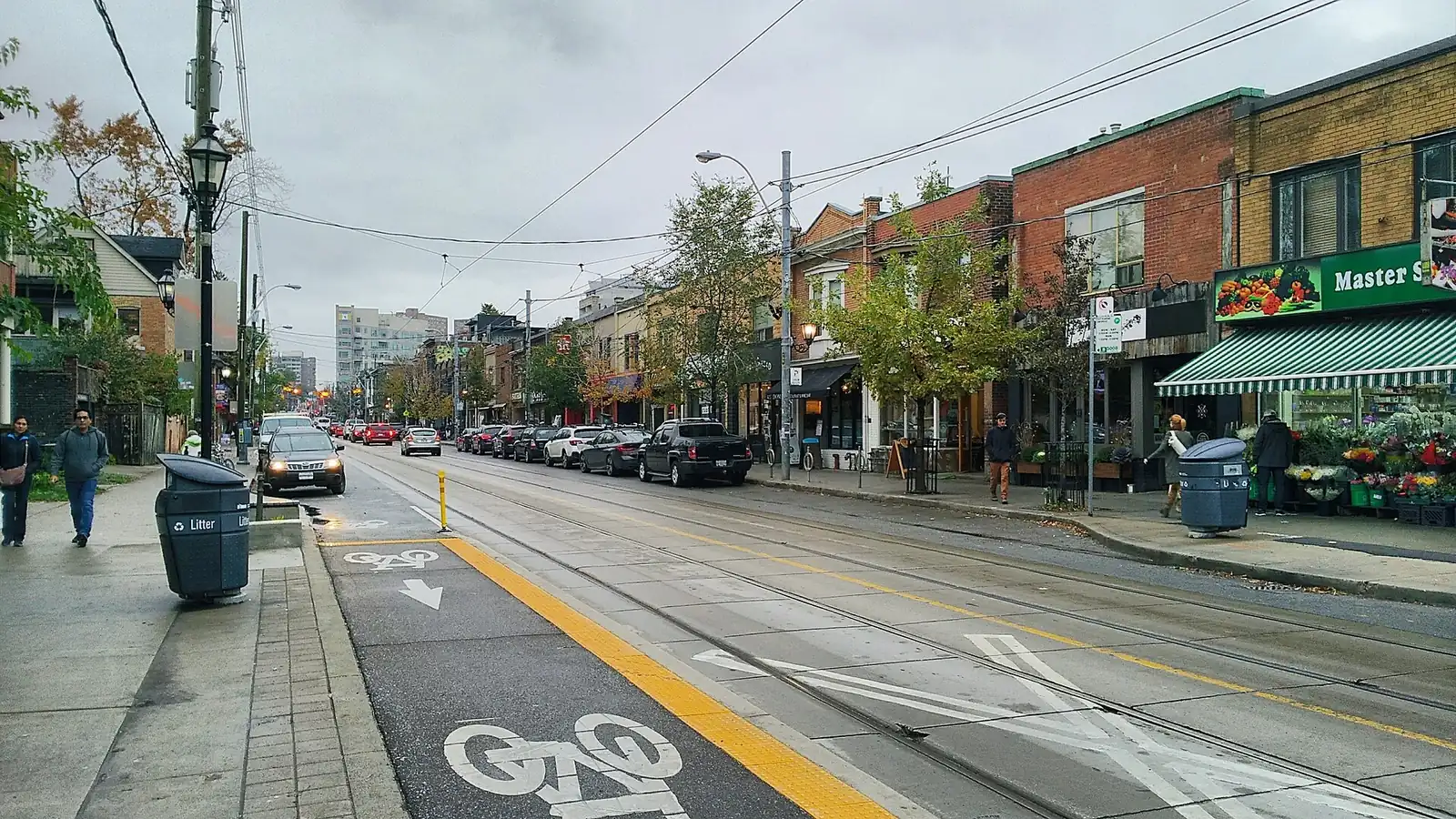
Retail (storefront and plaza)
Street storefronts, strip plazas and ground-floor shops. The quality of tenants and leases sets the value.
See details →
Convenience store and gas station
Convenience stores and gas stations with a store. Look at store profit, fuel sales and the tank and environmental issues separately.
See details →
Development land
Land to build on, or a site to clear and redevelop. Zoning and the chance of approvals set the value.
See details →
Apartment building (multi-unit rental)
A building with several rental units. Rental income, operating costs and rent increase limits set the value.
See details →
Checklist before you buy
What you check in almost every commercial deal, whatever the type.
Confirm income and costs with documents
Do not trust the seller’s numbers. Check the leases, tax returns, bank deposits and bills.
The leases
Look at the time left, renewal options, how rent can rise, who pays which costs (whether it is a net lease), and whether the landlord’s consent is needed to transfer.
Zoning
Check that the business you plan to run is allowed on that land. Ask the city planning department and a lawyer.
Environmental review
This matters most if the site had a factory, repair shop, gas station or dry cleaner. Do an environmental review (Phase I).
Building condition
Ask a building inspection professional whether big repairs such as the roof, floor, heating and cooling, or elevators are due soon.
Property tax and MPAC class
Look at the property tax bill and the assessment class, and check whether they may change.
Tax and HST
Unlike a home, a commercial deal often carries HST. Check with an accountant early.
Financing terms
Commercial loans have different terms from home mortgages. Talk to a bank or mortgage professional early.
Your professional team
Line up a lawyer, an accountant, an appraiser and, if needed, a building inspector and an environmental professional in advance.
Taxes and costs
Taxes to check when you buy commercial property. The official text of the legal provisions is shown with them.
What the official sources say 5
(iv) 2 per cent of the value of the consideration that exceeds $400,000; andIn plain wordsOntario land transfer tax is paid when the transfer of land is registered, and the part of the price above $400,000 is taxed at 2%. The extra 0.5% in the same section applies only to land with one or two single family residences, so for commercial and industrial land this 2% is the highest bracket. Toronto also has its own municipal land transfer tax, so ask a lawyer.
Source: ontario.ca/laws/statute/90l06 · checked Oct 30, 2026
Municipal Land Transfer Tax (MLTT) – (Toronto Municipal Code Chapter 760) has been applied to purchases on all properties in the City of Toronto in addition to the Provincial Land Transfer Tax as of February 1, 2008.In plain wordsPurchases of all properties inside the City of Toronto carry Toronto’s municipal land transfer tax in addition to Ontario’s. This page does not use the word “commercial” on its own, so ask a lawyer how it applies to a commercial deal.
Source: toronto.ca/services-payments/property-taxes-utilities/municipal-land-transfer-tax-mltt/municipal-land-transfer-tax-mltt-rates-and-fees/ · checked Oct 30, 2026
A particular supply by way of sale of a residential complex or an interest in a residential complex made by a particular person who is not a builder of the complex or, if the complex is a multiple unit residential complex, an addition to the complex, unlessIn plain wordsThe exempt list includes the sale of a residential complex by someone who is not its builder. A sale of a commercial or industrial building or land does not fall under this item, so HST often applies. It depends on whether the seller is an HST registrant and how the buyer reports it, so check with an accountant.
Source: laws-lois.justice.gc.ca/eng/acts/E-15/page-120.html · checked Oct 30, 2026
A supplier (other than a prescribed supplier) who makes a taxable supply of real property by way of sale is not required to collect tax under Division II payable by the recipient in respect of the supply whereIn plain wordsFor a taxable sale of real property, when certain conditions are met (for example the buyer is an HST registrant), the seller does not have to collect the HST. The buyer may then have to report and pay the tax directly under the law (s. 228 (4) of the same Act). The conditions and the reporting differ by deal, so check with an accountant.
Source: laws-lois.justice.gc.ca/eng/acts/E-15/section-221.html · checked Nov 2, 2026
Property assessments are based on the current value of properties as of a legislated valuation date, which is currently January 1, 2016.In plain wordsA property tax assessment is the value on a date set by law. On this page, checked October 30, 2026, that date is January 1, 2016. It can differ from what the property would sell for in today’s market.
Source: ontario.ca/page/property-tax · checked Oct 30, 2026
Where to check the market
Because value changes with timing and the market, read data that shows today’s market too. The reports below are the market reports each company publishes itself. We have not copied their numbers onto this page. Open them yourself to see the latest report.
- Cushman & Wakefield Canada — Toronto MarketBeatsQuarterly Toronto office and industrial market reportsChecked: Nov 2, 2026
- Avison Young Canada — Market and Sector ReportsGTA industrial, office and investment market reportsChecked: Nov 2, 2026
- Altus Group — CRE InsightsToronto commercial real estate market updates (quarterly) and the construction cost guideChecked: Nov 2, 2026
For the latest interest rate and economic news, see our explainer on the Bank of Canada rate decision.
Each company uses different areas, building classes and reference dates, so it is hard to compare their numbers directly. It is better to look at the changes over time within one company’s reports.
FAQ
Why is commercial property valued differently from a home?
People buy a home to live in, so prices of similar homes are the guide. Commercial property is often bought to earn income, so how much the building earns is the guide. That is why income and the cap rate are central.
Where do I find the cap rate?
You work backward from the prices and incomes of similar recent sales. Appraisers and commercial agents estimate it from market data, and market reports also show it. It varies a lot with time, property type, area and tenants, so do not use one number as it is.
Is a valuation the same as an appraisal?
A valuation is any estimate of value. An appraisal is a formal opinion a qualified appraiser writes in a report. A bank loan or a legal purpose may need an appraiser’s report. This page is guidance to help you understand and does not replace an appraisal.
Is it a loss to buy when the market is good?
Not necessarily. What matters is whether today’s price fits today’s income and market, and whether you could survive if the market changes (loan payments, vacancy). Calculate what it would look like if the market mood changes.
How is buying for your own use different from buying as an investment?
For a building you will use yourself, prices of similar buildings (direct comparison) are central. For an investment, income and the cap rate are central. A building for your own use can be rented out or sold later, so it helps to run the income numbers once too.
Shall we look at the building you are considering?
Tell me about the building and your plan, and I will explain in Korean which method is used to see the value and which documents to check first. A formal appraisal is done by a qualified appraiser. I represent buyers and help check the terms.
This page was made from official sources checked on Nov 2, 2026. It is not legal, tax or financial advice.
Main sources for this page
- MPAC, Three Approaches to Value · Oct 30, 2026
- Appraisal Institute of Canada, What Appraisers Do · Oct 30, 2026
- Land Transfer Tax Act (Ontario) · Oct 30, 2026
- City of Toronto, Municipal Land Transfer Tax (MLTT) rates and fees · Oct 30, 2026
- Excise Tax Act, Schedule V, Part I — exempt supplies of real property · Oct 30, 2026
- Excise Tax Act, s. 221 (2) · Nov 2, 2026
- Ontario, Property tax · Oct 30, 2026