Commercial valuation
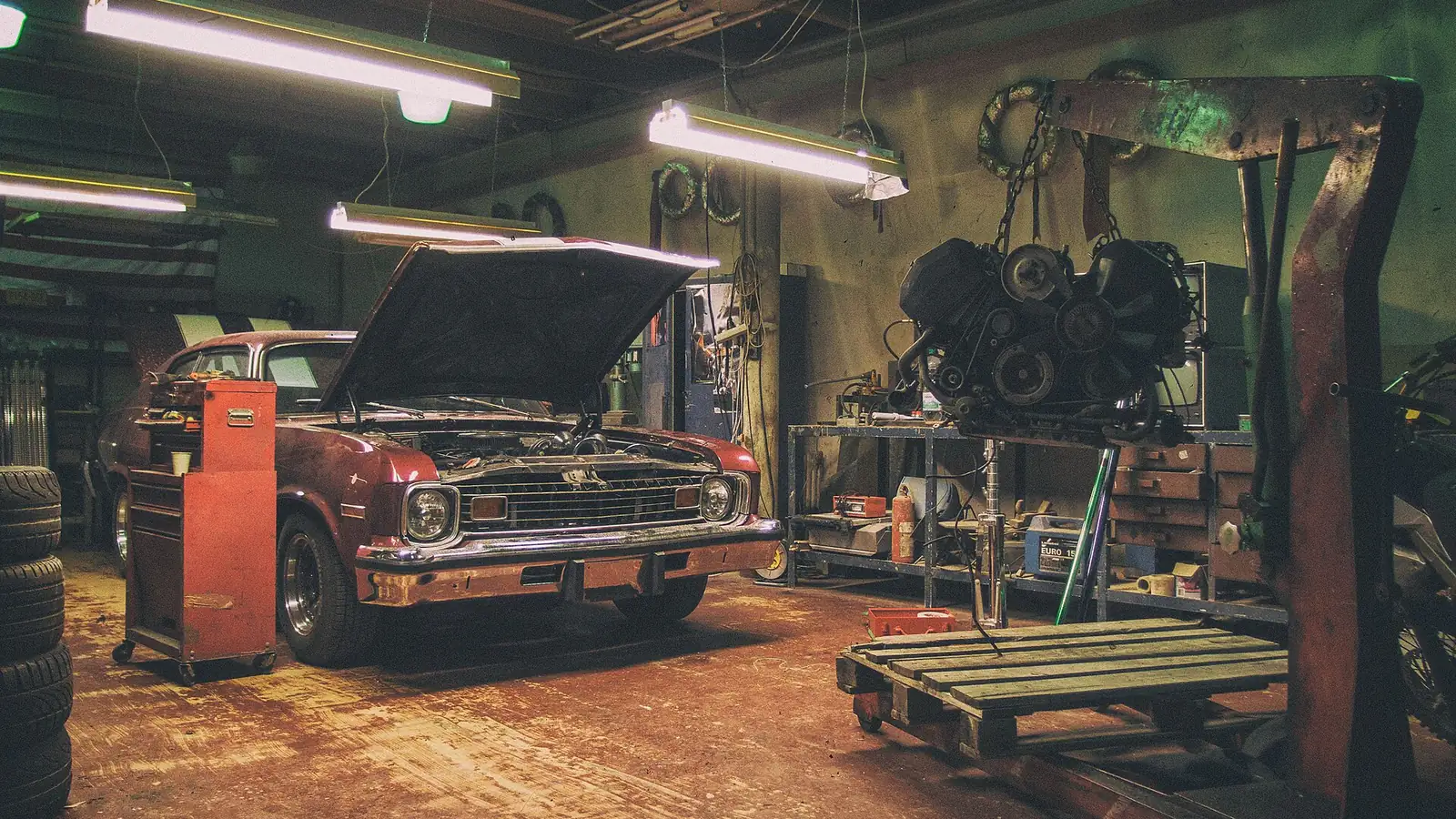
How to value: Auto shop (repair and body shop)
There are two main ways to buy an auto shop: buy the building too, or take over only the business in a rented space. If you buy the building, value the building and the business separately, and check first that the land and building have no environmental problems.
Main method
Building: income approach. Business: profit multiple
Check first
Profit confirmed from tax returns
Watch out for
Contamination and fuel tanks
Timing and the market The value of this type changes with the time and the market mood. Every number below is a made-up example, not a real market number.
How this type is valued
The building: treat it as a building that could be rented to someone else and use the income approach, or look at recent sales of similar buildings (direct comparison). For a shop building, ceiling height, the number of lifts (equipment that raises a car), number of work bays, parking and truck or car access affect the price.
The business: its value is usually estimated by multiplying seller’s discretionary earnings (SDE: the owner’s pay and personal costs added back to the profit) by a multiple. The multiple changes with the trade, the timing and the condition of the business, so there is no fixed number.
Confirm the business’s earnings from documents such as tax returns, HST returns and bank deposits, not from the seller’s words.
The business value includes goodwill (value you cannot see, such as loyal customers, location and name). It is similar to “key money” (권리금) in Korea, but in Canada it is settled inside the purchase price.
What drives the value
- Whether you are buying the building or only the business in a rented space.
- The number of lifts and work bays, and whether items such as a paint booth and equipment come with the sale.
- Whether regular customers and repeat accounts such as insurers, dealers and fleets (company vehicles) will stay after the sale.
- Whether the technicians want to keep working: much of the business may depend on one or two people.
- For a rented space: the time left on the lease, renewal options and how rent can increase.
- Location, traffic, parking and sign rules.
Documents and numbers to check
- Tax returns and financial statements for the last 3 years, HST returns and bank deposits.
- A sales breakdown: by customer, by insurance claim and by kind of work.
- An equipment list and who owns it: bought, leased or borrowed.
- An environmental review (Phase I) and any history of underground tanks or storage of waste oil, paint and solvents.
- Whether zoning allows repair and paint work, and the permit and inspection records.
- The lease: whether the landlord’s consent is needed to transfer it when the business is sold.
- A list of employees, their terms, and the plan for taking them on.
What to watch out for
- Environmental contamination: pollution that spread from waste oil, solvents or fuel tanks into the soil or groundwater can be very costly to clean up. Ask a lawyer who would be responsible for it. Always do an environmental review before you buy.
- Profit on the books that differs from real profit: cash sales or personal costs may be mixed in.
- A rented space with a short lease, or a landlord who will not consent to transferring the lease.
- A business that depends on one owner’s skills and contacts.
- Zoning that may change and restrict the work being done now.
A made-up example: how the business value changes with the multiple
These numbers are made up to show the arithmetic. They are not real multiples or prices from any deal. The example is a rented auto shop business with seller’s discretionary earnings (SDE) of $150,000 a year. Equipment and inventory are often counted separately, so they are not included here.
| Multiple | Seller’s discretionary earnings (SDE) | Business value (rough) |
|---|---|---|
| 2.0x | $150,000 | $300,000 |
| 2.5x | $150,000 | $375,000 |
| 3.0x | $150,000 | $450,000 |
What changes with timing and the market
- When many buyers use loans to take over businesses, rising loan rates can shrink the pool of buyers and lower the multiple. (A general principle, not a rule.)
- When the economy slows, people may drive less and put off repairs, so sales change. Check whether the last year’s sales are normal or were unusual.
- Even for the same shop, the room to negotiate differs when many sellers are on the market and when few are.
- A deal that includes the building is also affected by the real estate market (rates, sales of similar buildings).
- Do not treat the price of a similar shop sold a few months ago as today’s price.
Official sources
What the official sources say 5
“phase one environmental site assessment” means an assessment of property conducted in accordance with the regulations by or under the supervision of a qualified person to determine the likelihood that one or more contaminants have affected any land or water on, in or under the property;In plain wordsA Phase I environmental assessment is a review by a qualified person, using records and a site visit, of how likely it is that the land or water has been contaminated. It is also where the need for a Phase II study (which tests for contamination) is decided.
Source: ontario.ca/laws/statute/90e19 · checked Nov 2, 2026
Subject to subsection (2), a person shall not, (a) change the use of a property from industrial or commercial use to residential or parkland use; (b) change the use of a property in a manner prescribed by the regulations; or (c) construct a building if the building will be used in connection with a change of use that is prohibited by clause (a) or (b).In plain wordsTo change land from industrial or commercial use to residential or parkland use, a Record of Site Condition (RSC) must first be filed for the property (apart from the exceptions in subsection (2) of the same section). It is not required for every purchase. It matters most for old factory, repair shop, gas station or dry cleaner sites you plan to change to another use.
Source: ontario.ca/laws/statute/90e19 · checked Nov 2, 2026
A licence or registration referred to in this Regulation is not transferable. … Where the licence holder under subsection 4 (1) changes, the new party shall immediately apply for a licence to operate the facility.In plain wordsA facility that handles fuel such as gasoline (a gas station, for example) must be licensed to operate, and the licence cannot be transferred to someone else. When the licence holder changes, the new owner must apply for a new licence right away. This regulation covers facilities that handle fuel, so a repair shop without a fuel facility may not be covered. The regulator is TSSA.
Source: ontario.ca/laws/regulation/010217 · checked Nov 2, 2026
This Act does not apply to tenancies and tenancy agreements to which the Residential Tenancies Act, 2006 applies.In plain wordsThe Commercial Tenancies Act (CTA) does not apply to tenancies that the Residential Tenancies Act (RTA) applies to. The RTA covers rental units where people live, so leases of commercial space such as shops, offices and warehouses are usually looked at under the commercial law rather than the RTA. Check mixed buildings with shops below and homes above separately.
Source: ontario.ca/laws/statute/90l07 · checked Nov 2, 2026
A particular supply by way of sale of a residential complex or an interest in a residential complex made by a particular person who is not a builder of the complex or, if the complex is a multiple unit residential complex, an addition to the complex, unlessIn plain wordsThe exempt list includes the sale of a residential complex by someone who is not its builder. A sale of a commercial or industrial building or land does not fall under this item, so HST often applies. It depends on whether the seller is an HST registrant and how the buyer reports it, so check with an accountant.
Source: laws-lois.justice.gc.ca/eng/acts/E-15/page-120.html · checked Oct 30, 2026
FAQ
How is buying the building different from taking over only the business?
If you buy the building you own the land and building and must value the building separately. If you take over only the business, the lease from the landlord and the business’s profit are the center of the value. If the lease is short, you may not be able to use the business for long.
Is an environmental review required?
The law does not require one for every deal, but a repair shop can have waste oil, solvents and fuel tanks, so a Phase I review is strongly recommended before you buy the building. Lenders often ask for one.
How do I check the profit the seller says the business makes?
Match the tax returns, HST returns and bank deposits against each other. It is wise to have an accountant review these and recalculate the profit.
Other types
Warehouse and industrial
Warehouses, logistics space and small factories. Priced from rental income and recent sales of similar buildings.
See details →
Convenience store and gas station
Convenience stores and gas stations with a store. Look at store profit, fuel sales and the tank and environmental issues separately.
See details →
Restaurant
Restaurants, cafés and bars. Profit, lease terms and the liquor licence drive the value.
See details →
Shall we look at the building you are considering?
Tell me about the property or business you are looking at and I will explain how it is valued and what to check first. A formal appraisal is done by a qualified appraiser.
This page was made from official sources checked on Nov 2, 2026. It is not legal, tax or financial advice.
Main sources for this page
- Environmental Protection Act (Ontario) — Phase one environmental site assessment · Nov 2, 2026
- O. Reg. 217/01 (Liquid Fuels) · Nov 2, 2026
- Commercial Tenancies Act (Ontario) · Nov 2, 2026
- Excise Tax Act, Schedule V, Part I — exempt supplies of real property · Oct 30, 2026