What happened
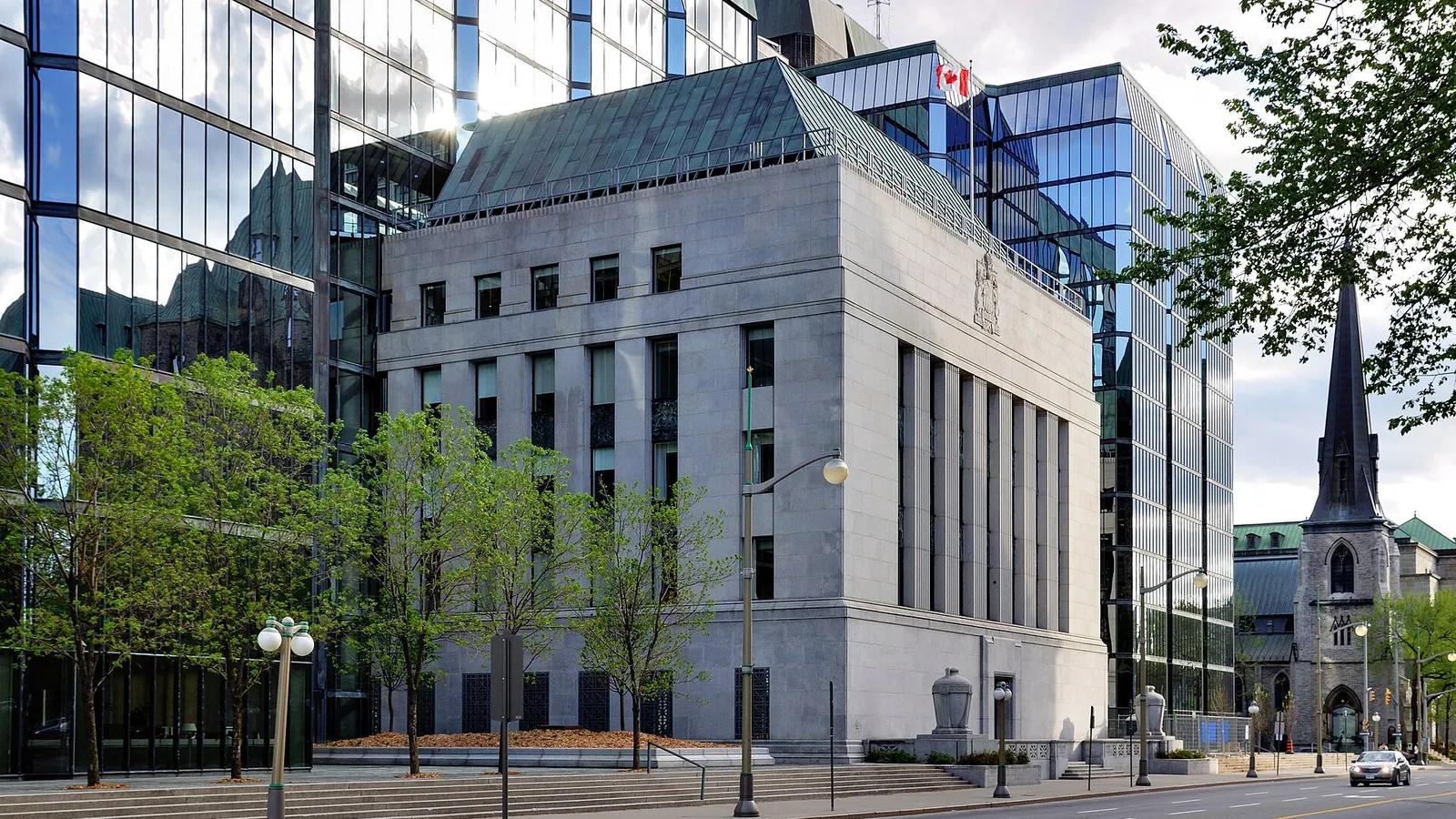
On September 2, 2026 the Bank of Canada left its policy rate at 2.25%. It was the seventh hold in a row, and the report says most economists expected it.
- Inflation in July was 3%, a full percentage point above the Bank’s 2% target. The governor said that was too high for comfort.
- New U.S. tariffs on a range of Canadian goods took effect on August 22, and Canada was planning counter-tariffs for September 8.
- The governor said the tariffs would weigh on fourth-quarter growth and hit the targeted sectors hard, but he did not expect a large direct impact on the whole economy.
- Because the economy was moving broadly as the Bank had forecast, it kept the rate unchanged.
- That day, the 5-year Government of Canada bond yield reached its highest level in more than two years.
In a chart: the last three September decisions
Putting the same September decision side by side shows how far the policy rate has come down over two years. Each number was checked in the Bank of Canada press release for that date.
| Period | Value (%) |
|---|---|
| Sept 4, 2024 | 4.25% |
| Sept 17, 2025 | 2.5% |
| Sept 2, 2026 | 2.25% |
Why these years: The same September decision each year, to see the change over one-year steps.
The 2024 and 2025 figures were checked in the press releases of those dates (2024-09-04, 2025-09-17).
Source: Bank of Canada press release (2026-09-02) (checked Nov 2, 2026). Bars start at zero.
The terms in plain words
- Policy rate: the one-day lending rate target the central bank sets. Bank prime rates and variable-rate mortgages follow it. A "hold" means it was not changed.
- Tariff: a tax a government charges on goods coming in from another country. When the U.S. puts tariffs on Canadian goods, the Canadian companies selling them suffer. When Canada puts counter-tariffs on U.S. goods, prices in Canada can rise a little.
- 5-year government bond yield: the interest rate the government pays to borrow for five years. Banks set 5-year fixed mortgage rates by watching it. So fixed mortgage rates can rise even when the policy rate stays the same.
- Price stability: keeping inflation near the 2% target. The governor said the Bank cannot control tariffs or oil prices, but its job is to make sure they do not upset price stability in Canada.
How the experts in the report read it
A bank chief economist quoted in the report felt the governor stressed the risk of higher inflation more than the risk to growth. But she said that does not mean a hike is coming, and that with bond yields already up, some tightening was already happening through fixed mortgage rates. Another analyst wrote that a hike late in the year was possible if oil prices did not ease. Those are their opinions, not this article’s prediction.
What it means for GTA buyers, sellers and renters (explanation)
This explains how to read the news. It is not advice.
- If you have a variable-rate mortgage: nothing changed that day. Prime rates stayed the same.
- If you are taking or renewing a fixed-rate mortgage: the policy rate was held, but bond yields rose, so, as the report notes, fixed mortgage rates could go up. Check actual rates with your lender.
- If you are buying: the key point of this news is that a policy-rate hold is not a mortgage-rate hold. Fixed rates follow the bond market; variable rates follow the policy rate.
- If you rent: this decision does not change your rent directly. Most rent increases in Ontario are limited to the yearly guideline.
What happened next, and what to watch
On October 28, the next announcement date the report mentioned, the Bank raised its policy rate to 2.5% (see the separate explainer). For the date after that, check the official schedule on the Bank of Canada website. This article does not predict future decisions.
Sources (open the originals)
- Original: CTV News (The Canadian Press) — checked Nov 1, 2026
- Bank of Canada, key interest rate — checked Nov 1, 2026
- Bank of Canada, Canadian interest rates — checked Nov 1, 2026